
From Root Shock to Revolution: Dr. Mindy Fullilove Connects the Dots
We must know the pain that racism and urban renewal wrought, to heal it

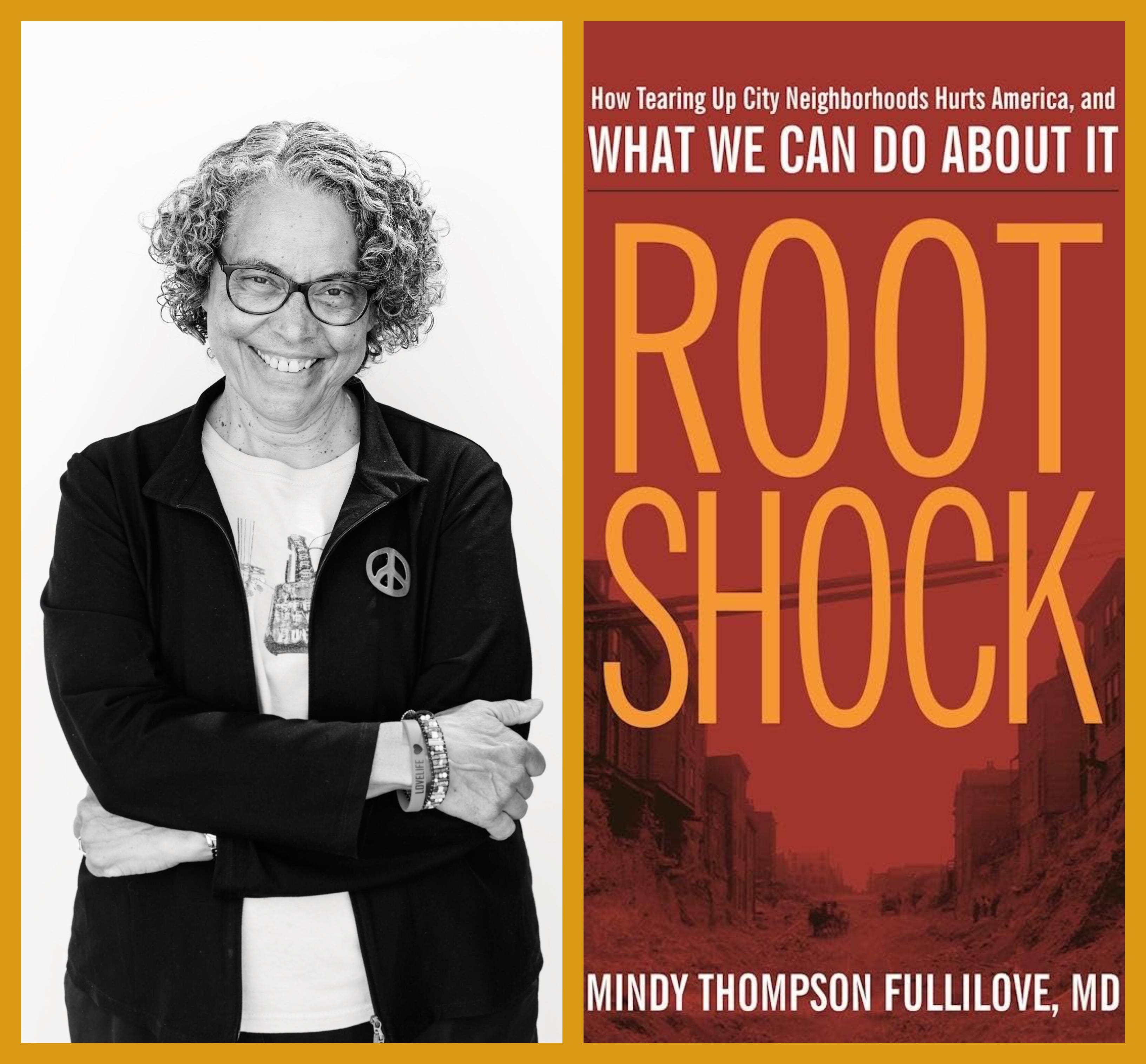
Social Psychiatrist Dr. Mindy Fullilove (author of the Substack “Health, Society, and a Little K-Drama”) writes at the end of her acclaimed book Root Shock:
“What would happen if our society grappled with the calamity of urban renewal? How might past injustice be remedied? How might the injuries to the city be rectified? How might we create the dwelling places we all long for?”
Grapple with it she has, and grapple with it we must. Fullilove is a witness, a visionary, and a change agent, and her insights and work deserve our attention and commitment. Her book makes the calamity clear - for both place and psyche - and charts a potential way forward, to a true renewal of spirit and purpose.
We must name our illnesses, our suffering, before we can propose remedies. Our illnesses are racism, white supremacy, and putting profit before people. The violence of these destructive biases now imperils the nation and world, and are most visible in the mindset of President Trump and his MAGA base.
Just this weekend, the man shared a video derogating Somali American Kindergartners - 5 year olds - as some kind of threat to American values. The children were singing about the value of education and filial piety.
Green EL, Freedman D. Trump’s Posts on Singing Somali Schoolchildren Stir Anger in Minnesota. New York Times, July 11, 2026 (Gift article)
On June, 25, 2026, the Supreme Court handed Trump a victory in ending TPS, Temporary Protected Status, allowing him to begin removal of hundreds of thousands of Haitians, Syrians, and others - whose homelands are far from safe.
We must grapple with the calamity.
To city planners, “urban renewal meant Negro removal.” Racism blinded them to the vibrance, vitality, and necessity of Black community in the inner cities, and allowed them to dismiss the needs of Blacks in favor of the needs of capitalism and Whites. Instead of supporting Black communities, “urban renewal” labeled them “blight” and “decay” and uprooted them. 2500 city neighborhoods were cleared away. 2/3rds of these, or 1600, were African American. (Just think of how many jazz clubs were wiped out! How much music erased! The potential for ears, minds, and hearts opening - lost!)
In 1900, 90% of Blacks were rural, but in 2000, 90% were urban. Blacks had fled racist conditions in the South only to find the neighborhoods they created were devastated by “urban renewal” after WWII. Jim Crow chased Blacks out, right into the mouth of the dragon of redlining and terror to keep them penned in city centers, and then urban renewal. The beast of racism tracked their exodus, because the mind of America had not yet grappled with its biases.
Dr. Mary T. Bassett writes in the introduction:
“The subsequent reconfiguration of cities was devastating to urban African-Americans. To this day, the loss of communities—told here from Roanoke, Pittsburgh, and Newark—still reverberates through families, neighborhoods, and entire cities, affecting all who live and lived there… [R]acism will not disappear without attention to the structures that perpetuate it.”
In 2002, Fullilove was listening to Dr. Walter Claytor of Roanoke, Virginia describing his family’s displacement, and the dots connected.
“It was the loss of a massive web of connections—a way of being—that had been destroyed by urban renewal; it was as if thousands of people, who seemed to be with me in sunlight, were at some deeper level of their being wandering lost in a dense fog, unable to find one another for the rest of their lives. It was a chorus of voices that rose in my head, with the cry, “We have lost one another.”
Dr. King famously said,
“In a real sense all life is inter-related. All men are caught in an inescapable network of mutuality, tied in a single garment of destiny. Whatever affects one directly, affects all indirectly. I can never be what I ought to be until you are what you ought to be, and you can never be what you ought to be until I am what I ought to be...This is the inter-related structure of reality.”
Fullilove writes:
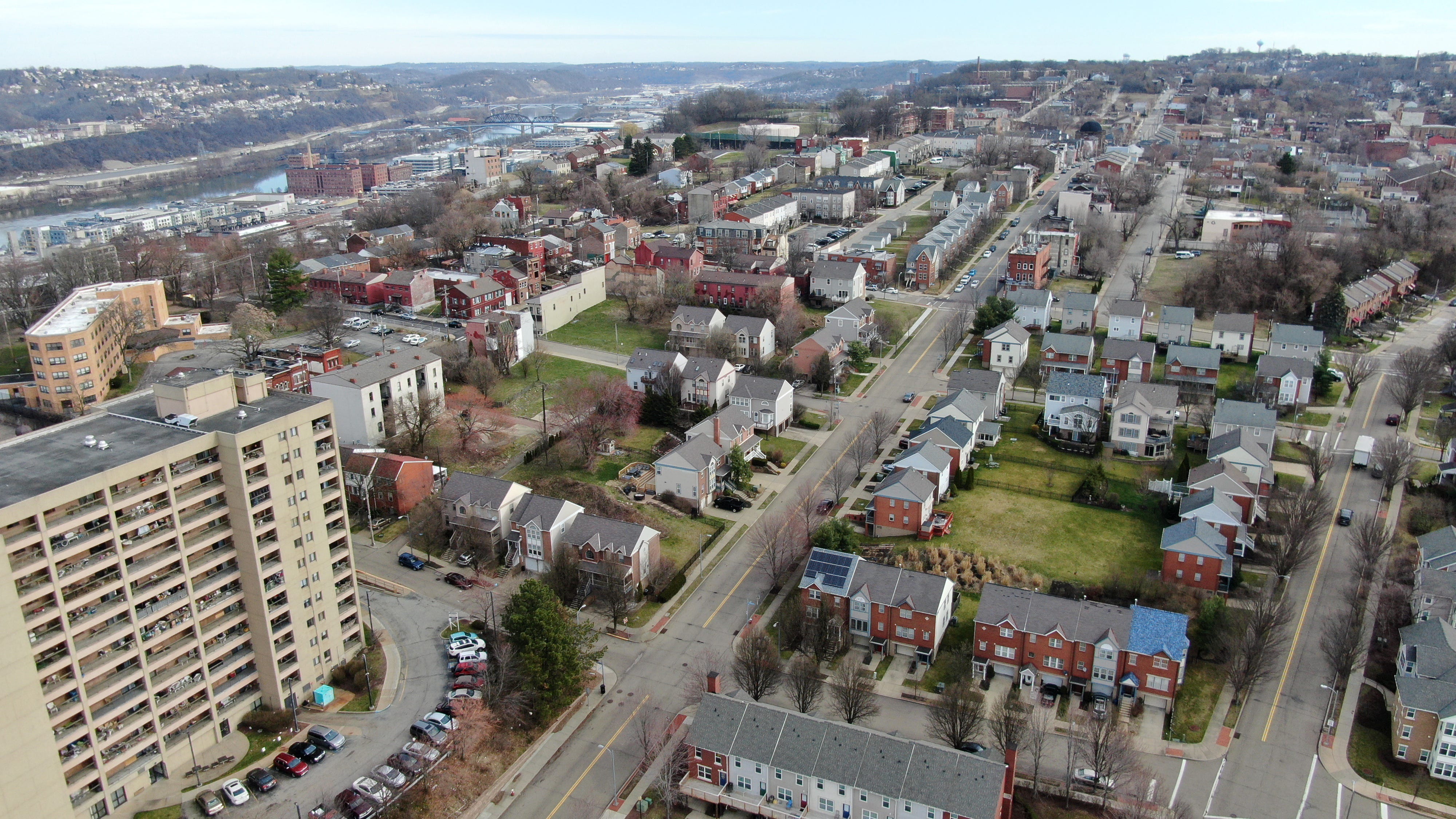
“This lesson of interconnectedness is as hard to learn as differential calculus or quantum mechanics. The principle is simple: we—that is to say, all people—live in an emotional ecosystem that attaches us to the environment, not just as our individual selves, but as beings caught in a single, universal net of consciousness anchored in small niches we call neighborhoods or hamlets or villages. Because of the interconnectedness of the net, if your place is destroyed today, I will feel it hereafter.”
Paul Robeson, Ralph Ellison, and others describe the richness of Black communities that offered kindness, understanding, emotional investment, and guidance for so many. These communities saw them, and lifted them to great achievement.
“Hard-working people, and poor, most of them, in worldly goods—but how rich in compassion! How filled with the goodness of humanity and the spiritual steel forged by centuries of oppression!”
– Paul Robeson, quoted in Root Shock
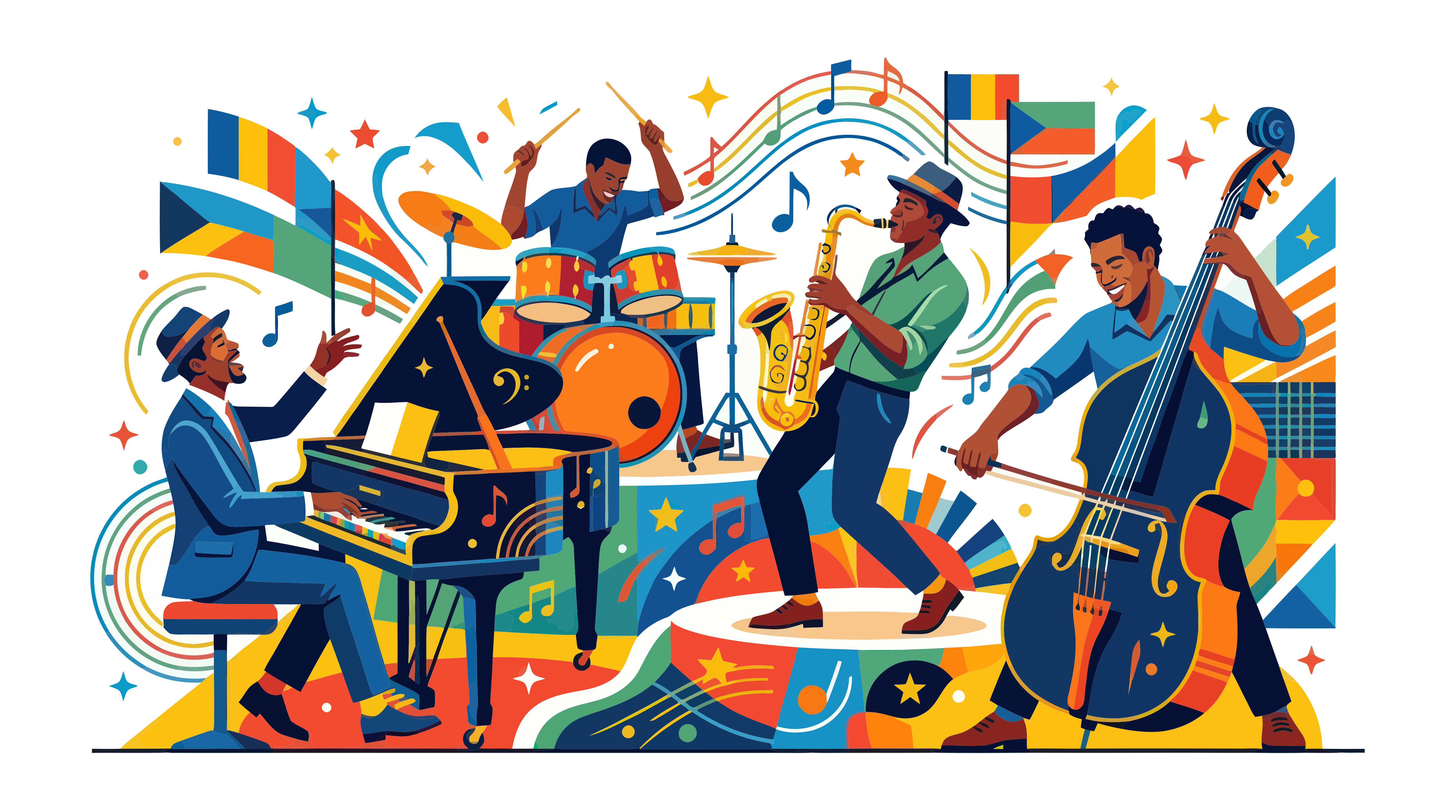
When Billy Eckstine’s big band was thrown out of St. Louis’s white-owned Plantation Club (because he refused to enter through the back door), he took his band to the welcoming all-Black Riviera Club. His band included Dizzy Gillespie, Charlie Parker, and an 18-year old stand-in trumpeteer named Miles Davis. Another example of neighborhood nurturance at its finest. Talent was seen, cherished, and incubated in Black communities. These places were generative, with generational knowledge, not “degenerate” as they were labeled by Whites. That generative capacity would be seen in the activism of the Civil Rights Era, made possible by the critical mass created by organized urban communities in the South and North.
Fullilove:
“The “better” that they found was not good enough, so they began to work, to organize, to struggle, to make the “better” better, the real New Jerusalem.”
“What did they want? Dr. King offered, in answer to that question, a vision of total relatedness. Religious scholars Kenneth L. Smith and Ira Zepp have pointed out, “Behind King’s conception of the Beloved Community lay his assertion that human existence is social in nature. ‘The solidarity of the human family’ is a phrase he frequently used to express this idea.”
Black communities had soul, before they were victims of attempted soul-murder by abuse, neglect, deprivation, and now an attempted retraction of Civil Rights altogether.
“We are a disappointed wreck that has raised its beast and tormentor high,
so that all may gaze upon it.”
— Ravi Chandra, Trump/MAGA/Rubio America Found to Have Perilously High Screaming-Toddler-Level Stranger Danger
Fullilove:
“Kindness worked through the collective as both buffer and glue. It was a force for tolerance and respect: it was not a guard-all shield. Kindness did not stop child molesting, it did not stop wife beating, it did not prevent children from torturing each other, it did not prevent unemployment. It did ooze into the interstices to ease the pain of all these things…Kindness declined after the rupture of community.”
But White Supremacy, racism, individualism, and capitalism are aimed at the web of connection, kindness, and community. They are explicitly anti-kindness, anti-cohesion, and antagonistic to love and compassion, particularly across difference. Black communities were “in the way” of White needs for the use of space, the control of land and society. Such horrific devaluation is part and parcel of America’s “nation building.”
They don’t see us. They don’t see us as we are. They don’t care about us. Have they lost the capacity to care? Has it been driven from them? Have they ever had it?
These are all perilous gaps in the fabric of relationship, gaps which we must aim to name, and fill, if we are to survive, thrive, and even transform our predicament.
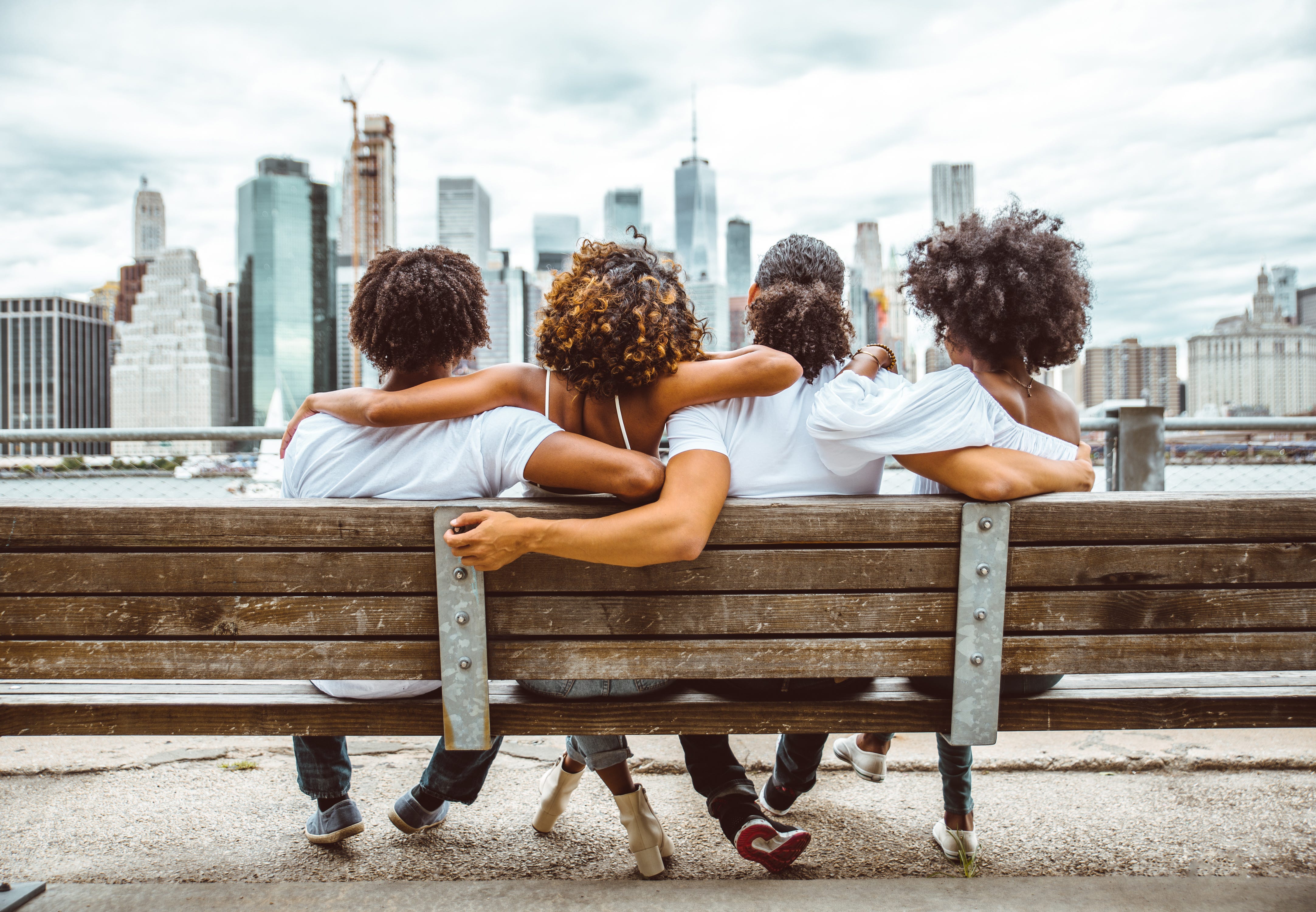
Root shock is the result of community upheaval. “Root shock is the traumatic stress reaction to the destruction of all or part of one’s emotional ecosystem.” Maybe much of our national anguish is a kind of phantom limb pain at the places we have been amputated from each other; feeling loss, but uncertain and unconscious of what exactly we have lost, because it is at least somewhat hidden; feeling our dissociation, and unable yet to find our way to re-association, mutuality and deeper connection.
Then Pittsburgh Hill District Councilman Sala Udin said,
“How easy it is to hurt each other, because we are not that close anymore. We are not family anymore. You are a stranger. You are from another part of town. And, all of that, I think, contributes to a broken culture, broken values, and a broken psyche, and weakness in this city. And it all resulted from the blowup of the community into different pieces, scattered around the city.”
If America has actively estranged us - what can anneal and heal us?
Fullilove highlights her work with French urban planner Michel Cantal-Dupart who brings beauty, connection, engagement, and freedom of movement to his visions for urban community. She breaks his work into principles of the “aesthetics of equity” that link beauty and justice:
Respect the common life (the life found in the city commons) the way you would an individual life.
Treasure the buildings history has given us.
Break the cycle of disinvestment.
Ensure freedom of movement.
Examples from Cantal’s work include a school for prison guards that became a physical manifestation of freedom and reform; a center for handicapped people that invited integration and freedom of movement; a campaign to help free a friend held hostage in Lebanon; and helping spark a revitalization of Carthage, Tunisia. Fullilove, inspired by these principles and her own thinking, helped organize NYC RECOVERS after 9/11, laying down healing pathways after that trauma and displacement, and worked to heal community in Pittsburgh’s Hill District as well as Orange, New Jersey.
From neurons to neighborhoods, synapses to society, and back again.
We could be a nation of neighbors and neighborhoods. We could be engaged, each of us, in communal uplift and the creation of beloved community extending across our vast landscape, border to border, and beyond. Instead, we are a nation that has lost its marbles, if it ever had them to begin with.
I can’t help but also think of the genocide of Native Americans, and also the racist barriers against Asian immigration. Think of the kind of communities we could have had if all these communities would have been welcomed, embraced, and learnt from, instead of eliminated and barred. What more could America now be - with the vitality of Somali, Haitian, and Syrian immigrants?
But without the wound, there is no reason for the journey.
We have a journey before us. Daunting. Perhaps impossible. But necessary.
Having seen destruction, I hope we can now lift love.
Dr. Mindy Fullilove helps us find our roots. Her work can help us generate a geocortex to guide us into a more promising future, of freedom, beauty, and justice.
Becoming a paid or founding subscriber allows me dedicated writing and research time. You can also now tip me at Ko-Fi.com/sunmoonlight, or donate to my compassion non-profit SF Love Dojo via PayPal. Thanks, though, to all my readers, free and paid! I very much appreciate the Substack Nation we are forming!
Ravi Chandra is a psychiatrist, writer, compassion educator, and civilizational health shaman in San Francisco, and a Distinguished Fellow of the American Psychiatric Association. He is the recipient of the 2025 Kun-Po Soo Award for Achievement in Asian American Psychiatry from the APA and APA Foundation. Here’s his linktree. Please sign up for updates via Substack where you can also support his educational and creative mission by becoming a free, paid or founding subscriber. For fourteen years, he was lucky to have his MOSF posts published by the Center for Asian American Media, and is now at work broadening and building a diverse creative community and coalition through reflecting on culture and psychology for East Wind eZine.See all the East Wind posts here. He writes from the metaphorical intersection of The Fillmore and Japantown in San Francisco, where Black and Asian communities have mingled since the end of the incarceration of Japanese Americans during World War II. He literally works there, between two Indian restaurants, go figure. His debut documentary was named Best Film (Festival Director’s Award) at the 2021 Cannes Independent Film Festival. The Bandaged Place: From AIDS to COVID and Racial Justice is available on-demand. His nonfiction debut, Facebuddha: Transcendence in the Age of Social Networks, won the 2017 Nautilus Silver Award for Religion/Spirituality of Eastern Thought. You can find him on Psychology Today, Medium, Twitter, Threads, Facebook, Instagram, YouTube, TikTok, SoundCloud, or better yet, in the IRL.